

TFSA Excess Contributions: Decline in Value

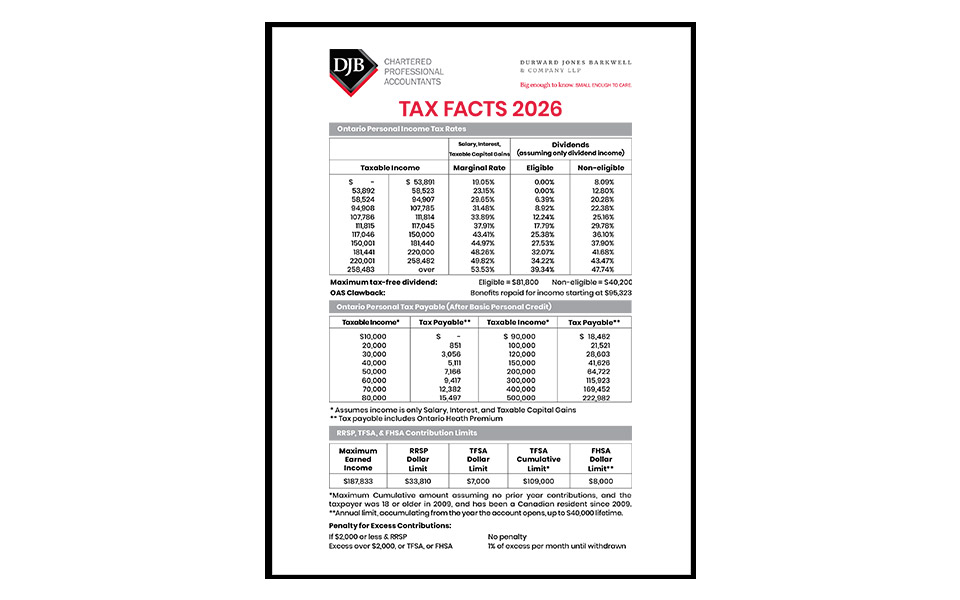
A July 25, 2025, Federal Court case found that CRA’s denial of penalty tax relief on excess TFSA contributions was reasonable. Due to the loss of value in the taxpayer’s TFSA, the taxpayer could not withdraw the full amount of his excess contribution. The taxpayer noted that without relief, his only means of reducing the overcontribution was to wait for annual TFSA limit increases, currently set at $7,000, which would require approximately 16 years for the ongoing tax to be fully eliminated. CRA found, and the Court agreed, that this situation provided no basis for relief. The Courts have ruled similarly in several other cases.

However, the Court stated that it shared the taxpayer’s concerns that, in certain circumstances, prolonged and ongoing liability and inability to remedy overcontributions appear to be inconsistent with the legislator’s intent. The Court stated that the legislation, as is, operates as a perpetual tax trap for taxpayers who made a good-faith but mistaken overcontribution, and even when they act to unwind it to the best of their ability, they cannot do so because the value of their TFSA is insufficient.

Prior to making TFSA contributions, check your available contribution room on the CRA My Account portal. Ensure to adjust the CRA-provided contribution room for factors that may not yet be reflected in CRA’s balance, such as contributions made since CRA’s last update.

Liberal Election Platform: Potential Tax Related Changes

With the most recent federal election resulting in a Liberal minority government, individuals and businesses should be aware of their tax-related platform proposals, as summarized in the listing below. Many are broad and lack detail, and some were previously announced by the former government.

Business items included:

  • reintroducing the Multi-Unit Rental Building (MURB) tax incentive for home builders (first introduced in the 1970s);
  • broadening the critical mineral exploration tax credit by expanding qualifying minerals to include critical minerals necessary for defence, semiconductors, energy, and other clean technologies;
  • expanding eligible activities under Canadian exploration expenses to include the costs of technical studies, such as engineering, economic, and feasibility studies for critical minerals projects;
  • modifying the clean technology manufacturing investment tax credit to include critical mineral mine development expenses for brownfield sites while expanding the list of priority critical minerals;
  • extending the Carbon Capture, Utilization and Storage (CCUS) investment tax credit to 2035; • reinstating the CCA accelerated investment incentive, including immediate expensing for manufacturing or processing machinery and equipment, clean energy generation, energy conservation equipment, and zeroemission vehicles;
  • increasing the claimable amount under the Scientific Research and Experimental Development tax incentive program (SR&ED) for Canadian companies to $6 million (from $3 million);
  • establishing a Canadian patent box which, according to the costing submission made to the Parliamentary Budget Officer, would carry a tax rate that is half of the current federal corporate income tax rate on income derived from certain types of intellectual property, effective July 1, 2025;
  • expanding the flow-through share regime to include certain startups, allowing investors to deduct eligible R&D expenses directly;
  • reducing/removing interprovincial trade barriers and achieving mutual recognition of credentials; and
  • introducing a 20% Artificial Intelligence (AI) deployment tax credit for small and medium-sized businesses in respect of qualifying AI adoption projects, if the taxpayer can demonstrate that the AI expenditure increases jobs.

CRA items included:

  • introducing automatic tax filing, starting with low-income households and seniors;
  • leveraging technology to better identify and prosecute instances of tax evasion, fix loopholes, and strengthen enforcement; and
  • collecting an additional $3.75 billion from increasing penalties and fines over a three-year period.

Capital gains/losses items included:

  • cancelling the proposed increase to the capital gains inclusion rate, thereby retaining the 50% inclusion rate.

Corporate tax items included:

  • conducting a review of the corporate tax system based on the principles of fairness, transparency, simplicity, sustainability, and competitiveness.

Employment items included:

  • expanding the labour mobility tax deduction to cover tradespeople who travel more than 120 km from their home to a job site (currently 150 km), as well as significantly increasing the per-year tax deduction limit (no amounts were provided);
  • supporting workers affected by US tariffs by implementing various EI measures; and
  • enhancing the EI system to better reflect the modern workforce with flexible support.

Estate planning items included:

  • reducing the minimum amount that must be withdrawn from a Registered Retirement Income Fund (RRIF) by 25% for one year; and
  • increasing the guaranteed income supplement (GIS) by 5%.

GST/HST items included:

  • reducing GST costs for first-time homebuyers by eliminating the GST on homes up to $1 million and reducing it on homes between $1 million and $1.5 million.

Personal items included:

  • reducing the marginal tax rate on the lowest tax bracket by 1%; • reviewing and reforming the process to apply for the Disability Tax Credit (DTC);
  • introducing an apprenticeship grant of up to $8,000 for registered apprentices (it would convert to an interest-free loan if the program was not completed) in addition to the current $20,000 interest-free loan provided to apprentices; and
  • introducing a refundable health care workers hero tax credit for personal support workers valued at up to $1,100 a year.


Watch for developments in these areas!

Automatic Change to Electronic Mail for Businesses: Action Needed

As of June 16, 2025, CRA changed the default correspondence method for most businesses to online only (i.e. not delivered by paper mail). As business correspondence is presumed received on the date that it is posted online to CRA’s My Business Account, it can be problematic if correspondence requiring action goes unnoticed.

To receive notifications that mail has been posted online, the taxpayer must provide CRA with an email address and register that address for notifications related to each applicable program (e.g. GST/HST, payroll, corporate tax, etc). Regardless of whether the business registers for notifications or even provides an email address, it will still be transitioned to online mail. The presumption of receipt applies regardless of whether the taxpayer receives notifications. Businesses should ensure to sign up for My Business Account to avoid losing access to important CRA correspondence.

Businesses can opt out of receiving online mail (thereby receiving paper mail) by changing their settings in the Profile section of My Business Account or by submitting Form RC681 Request to Activate Paper Mail for My Business to CRA. However, CRA may still provide online-only mail until they finish processing the request. Communications posted within 30 days of a request are still presumed to be received on the day of posting. As such, taxpayers should monitor their online CRA account during the transition period. Requests can only be made by an individual with signing authority, such as an owner, director or legal representative as reflected in CRA’s records.

It is important to ensure that mailing addresses are kept current as undeliverable mail will result in a change back to online mail. In addition, businesses will need to make a new request to activate paper mail every two years.

If paper mail is selected for existing business program accounts and a new account is registered, a new request for paper mail will be required for that account.

Consider whether paper mail or online-only mail is your preferred method of communication with CRA. If you prefer paper mail, ensure to opt out of online mail for all relevant program accounts and monitor your online accounts during the transition period.

The Healthy Way to Hire the Kids

Most businesses have accounting, computer, and vacation policies. Why do so few have family employment policies?

Making decisions about hiring younger relatives can be difficult. Skills and talents may vary widely, or maybe there’s not a job for everyone.  And sometimes a family member just doesn’t work out as an employee.

Hiring the kids requires a lot of thought, and the time to do the thinking is before the next generation comes of age. Employment in a family business is not an entitlement; business needs and individual abilities must determine hiring decisions.  

When creating family employment policies, consider:

Experimentation:  Summer jobs can be a great way for kids to “try out” the family business and vice versa. Create a summer job policy outlining the type of work kids are expected to perform, along with personal learning goals.

Education:  Is a college degree required to work at the company?  Perhaps a graduate degree in a certain specialty?  If so, detail the company’s expectations before hiring family members.

Situation:   In what position will the children start?  Will they rotate through jobs in a training program?  Should they work outside the family business first?  Address these questions in writing.

Compensation:   Family members should be paid based on fair market value for their job responsibilities.  Detailing salary and bonus formulas will help to ensure that everyone is treated fairly.

Performance:   All employees, including family members, deserve regular performance reviews. Spell out review schedules and adhere to them.

Separation:   It’s imperative to consider a separation protocol for family members. Indicate performance requirements for continued employment, and include specific behaviors or actions that will not be tolerated.  Also, specify severance package details.

Human resources issues are complicated.  Having formal family employment policies in place can alleviate at least some of the emotion and angst inherited in mixing family and business.


2025 Provincial Budget – Ontario

On May 15, 2025, Ontario’s Minister of Finance, Peter Bethlenfalvy, presented the 2025 Ontario Budget – A Plan to Protect Ontario.  The province’s budget includes the following tax measures:

Business Tax Measures


Corporate income tax rates

Ontario’s corporate income tax rates have not changed.

Ontario tax deferral

The budget provides businesses a reminder that the payment of select provincially administered taxes (e.g. employer health, gas, fuel, and others) may be deferred for six months, from April 1, 2025, to October 1, 2025.  Although penalties will not apply for missed payments during this period, there is no deferral of tax return filing deadlines.

Ontario made manufacturing investment tax credit (OMMITC)

The refundable tax credit has increased from 10% to 15% on up to $20 Million of eligible investments per taxation year. Therefore, the maximum credit will increase from $2 Million to $3 Million per taxation year. The $20 Million limit must be shared amongst an associated group of corporations and will be prorated for short taxation years. Eligible investments include buildings and equipment used in manufacturing and processing (M&P) in Ontario, that are acquired and become available for use on or after May 15, 2025, and before January 1, 2030.

The credit has been extended to non-Canadian-controlled private corporations (“non-CCPCs”), which have a permanent establishment (“PE”) in Ontario.  Non-CCPCs are eligible for a non-refundable tax credit (“NRTC”). Any unused NRTC’s could be carried forward up to 10 taxation years and applied against taxes payable.

The budget includes a repayment of the credit where after May 14, 2025, the eligible capital property is sold, converted to non-M&P use, or removed from Ontario within five years. The repayment amount would be the lesser of:

  • The total value of the credit; and
  • The credit amount relative to the value of the property at the relevant time.
Ontario shortline railway investment tax credit (OSRITC)

The budget introduces a 50% refundable tax credit for capital property (included in capital cost allowance classes 1, 3, or 13) and labour expenditures on railway-related maintenance made on or after May 15, 2025, and before January 1, 2030, by qualifying corporations. A qualifying corporation must be licensed either provincially under the Shortline Railways Act (Ontario) or federally (class II & III) under the Railway Safety Act and must have a PE in Ontario. The credit will be limited to $8,500 per track mile in Ontario and the labour expenditures are limited to railway track maintenance expenditures paid to individuals who are residents of Ontario for work performed in Ontario.


Personal Tax Measures


Personal income tax rates

Ontario’s personal income tax rates have not changed.

Ontario fertility treatment tax credit

The Ontario government has introduced a new fertility treatment tax credit effective January 2025, aimed at helping individuals with the costs of fertility services. The credit will cover 25% on up to $20,000 of eligible fertility- and surrogacy-related expenses, with a maximum tax credit of $5,000 per year. Eligible expenses include in vitro fertilization (IVF) cycles, fertility medications, diagnostic testing, and travel for treatment. This credit is available in addition to the non-refundable federal and Ontario medical expense tax credits for the same eligible expenses.


Other Tax Measures


Changes to Gas and Fuel Tax

Effective July 1, 2025, the tax on propane used in licensed road vehicles will be eliminated.

Additionally, the Ontario government has made permanent the reduced tax rate of 9¢ per litre on gasoline and fuel, which had previously been lowered from 14.7¢ for gasoline and 14.3¢ for fuel. These temporary reductions were originally set to expire on June 30, 2025.

Changes to Alcohol taxes

Effective August 1, 2025, the Ontario government is proposing amendments to the Liquor Tax Act, 1996 that would reduce alcohol-related tax rates. The spirits basic tax rate would be lowered from 61.5% to 30.75%. For Ontario microbrewers, the beer basic tax rates would be reduced from 35.96¢ to 17.98¢ per litre for draft beer, and from 39.75¢ to 19.88¢ per litre for non-draft beer (with transitional rules applying). Additionally, the refundable corporate Small Beer Manufacturers’ Tax Credit (SBMTC) will be adjusted to reflect these new rates, offering enhanced relief to qualifying corporations for eligible sales occurring after July 31, 2025.

How to Make a Payment with Canada Revenue Agency for Your Business

Online Banking Payments

Make a payment to the CRA through online banking, the same way you pay your phone or hydro bill.

  • Sign in to your financial institution’s online business banking service.
  • Under “Add a payee,” look for an option such as:
    • Federal – Corporation Tax Payments – TXINS
    • Federal – GST/HST Payment – GST-P (GST-P)
    • Federal Payroll Deductions – Regular/Quarterly – EMPTX – (PD7A)
    • Federal Payroll Deductions – Threshold 1 – EMPTX – (PD7A)
    • Federal Payroll Deductions – Threshold 2 – EMPTX – (PD7A)
    • Federal – Canada emergency wage subsidy repayment
    • Luxury Tax
    • Underused Housing Tax (UHT)
  • Enter your 15 digit business number as your CRA account number.

You are responsible for any fees that may be charged by your financial institution.


Debit Card Payments Via ‘My Payment’

Make a payment with your Visa® Debit,  or Debit MasterCard®

My Payment is an electronic payment service offered by the CRA that uses Visa® Debit, Debit MasterCard® for businesses to make payments directly to the CRA using their bank access cards.  The CRA does not charge a fee for using the My Payment service. Credit Cards not accepted with this service.

To use My Payment you need a card with a Visa Debit logo or Debit MasterCard logo from a participating Canadian financial institution.

Before you start ask your financial institution about your daily or weekly transaction limit and any fees for making online payments. The CRA does not charge a fee for using this service.

CRA’s My Payment Webpage


Pay Through a Canadian Financial Institution

To make a payment at your Canadian financial institution, you will need a personalized remittance voucher. Financial institutions will not accept photocopies of remittance vouchers or payment forms.

You can make a payment in foreign funds.  The exchange rate you receive for converting the payment to Canadian dollars is determined by the financial institution handling your transaction on that day. You are responsible for any fees that are incurred.

Arrangements will need to be made with your financial institution if you are making a payment of more than $25 million.

Be sure to provide accurate information to help the CRA apply your payment to the intended account.  A personalized remittance voucher will help CRA apply your payment properly.  You can request personalized remittance vouchers online or by phone.


Mailing Your Payment

The government released legislation, effective January 1, 2024, that any tax payment or remittance made by a corporation to the CRA exceeding $10,000 must be done through electronic means.

If your tax payments exceed $10,000, you should no longer make these payments using a cheque.

It is highly encouraged to remit payments to the CRA electronically even if the amount is less than $10,000 as electronic payments are processed quicker. This will also significantly reduce the risk of lost or misapplied payments. Furthermore, it is usually far easier and faster for the CRA to trace a lost or misapplied electronic payment than a cheque mailed to the CRA.

If you still wish to send a cheque or money order, make it payable to the Receiver General for Canada and include your remittance voucher. Note: Payment is considered received on the date CRA receives the cheque, not the postmark date.

Mailing address:
Canada Revenue Agency
PO Box 3800 STN A
Sudbury ON P3A 0C3


Payment by Pre-Authorized Debit (PAD)

Set up a pre-authorized debit agreement and eliminate the need for postdated cheques.

Pre-authorized debit (PAD) is a secure, online, self-service payment option for individuals and businesses. This option lets you set the payment amount that you authorize the CRA to withdraw from your Canadian chequing account to pay your taxes on a date, or dates, of your choosing.

Due to the processes that must take place between the CRA and the financial institution, the taxpayer’s selected payment date must be at least 5-business days from the date their PAD agreement is created or managed.

See Federal holidays for a list of non-business days.

There is a ‘pay by pre-authorized debit’ option through GST/HST netfile available for an amount owing.

A PAD agreement can only be set up online, not over the phone.

Steps to create a pre-authorized debit agreement for businesses

To create a PAD you have to be registered for My Business Account.  Click on ‘CRA register’ or ‘Continue to Sign-In Partner’ and complete the steps.  Once completed, your official access code will be sent to you by mail.  Once you enter the access code into My Business Account you will have full access, which allows you to view, create, modify, cancel, or skip a payment.

This option is not designed to be used frequently due to the limitations on payments and the fees involved.

Steps to create a pre-authorized debit agreement for individuals

To create a PAD, you must to be registered for My Account. Once signed in:

  • Select the ‘Proceed to pay’ button and select the ‘Pay later’ option to create a PAD agreement.
  • Access ‘Manage pre-authorized debit’ under the Related services within the Accounts and payments section to view, modify, cancel, or skip a payment.
  • A PAD agreement can also be created within MyCRA, for an amount owing, by selecting the ‘Proceed to pay’ button and the ‘Pay later’ option. Your credentials are the same as in My Account.

Credit Card Payments via Third-Party Service Providers

You can make a payment with a credit card, debit card, PayPal, or Interac e-Transfer by using a third-party service provider.

Different service providers offer different payment methods. 

The third-party service provider will send your business or individual payment and remittance details online to the CRA for you.  

Ensure that you set up your payment well in advance of your payment’s due date as payment delivery is not immediate, and is determined by the third-party service provider that is used.

Note: Third-party service providers charge a fee for their services. Click here for a full list of third-party service providers.  


Payments via Wire Transfer for Non-Residents

Non-residents who do not have a Canadian bank account can make payments to the CRA by wire transfer.

Wire transfers for submitting your non-resident GST/HST security deposit are not available at this time.

What you need to know

All wire transfers must be in Canadian dollars.

Your financial institution may have standard charges that apply to wire transfer payments.  Make sure that your financial institution does not deduct the wire transfer fee from the total payment amount due as this will result in an underpayment.

Wire details

You will need the following information to transfer funds to the CRA’s account:

Name of banking institution: The Bank of Nova Scotia
4715 Tahoe Blvd
Mississauga, ON
Canada L4W 0B4
SWIFT: NOSCCATT
Bank number: 002
Transit number: 47696
Canada Clearing Code/Routing Code:  //CC000247696
Beneficiary name: Receiver General of Canada
Beneficiary account number: 476962363410
Beneficiary address:  11 Laurier Street
Gatineau, Quebec K1A 0S5
Description field: Authorization number: 12226367 + your CRA account number and details
Charges field: “OUR”

To avoid processing delays include the following information with your wire transfer:

For Businesses:

  • non-resident account number or business number
  • business name
  • period end date
  • fiscal year
  • telephone number
  • return/remittance
    • Provide a copy of your tax remittance or GST/HST return/remittance by fax to the CRA:
    • Attention: Revenue Processing Section
    • Fax: 204-983-0924
    • Provide the amount paid, the date paid and the confirmation number if available

Avoid late fees

You are responsible for making sure the CRA receives your payment by the payment due date. If you are using a third-party service provider, please ensure that you clearly understand the terms and conditions of the services that you are using.

How Does GST/HST Apply to Airbnb/Short-term Rentals?

The popularity of Airbnb, short-term rental pools for cottages and vacation properties continues to grow.  One aspect of venturing into the short-term rental game is how GST/HST applies.  The volume of rental income and the length of the rentals is the determining factor on whether you will need to charge GST/HST.

Essentially, long term-rentals are exempt from GST/HST, while short-term rentals are subject to the tax.

What is considered a short-term rental?

A short-term rental is generally one where the period of occupancy is less than one month and the consideration for the supply is more than $20 a day.

Am I considered a small supplier?

If you are supplying short-term rentals, you will need to determine if you are considered a small supplier for GST/HST purposes.  A small supplier is one whose worldwide annual GST/HST taxable supplies, (including zero-rated supplies and including the sales of any associated parties) are less than $30,000, or less than $50,000 for public service bodies (colleges, non-profit organizations, charities, hospitals).

One of the most common oversights we see is forgetting to include any other associated business revenue into the small supplier test.

Should I voluntarily register for GST/HST?

If you are under the $30,000 of taxable supplies for your associated group, you can elect to voluntarily register for GST/HST.  The benefits of this would be to enable the claim of any GST/HST paid on expenses related to your short-term rental income.  It may also permit you to recover some or all of the GST/HST you may have paid on the unit.

But be aware – if you choose to register, you will be required to collect and remit the GST/HST on your short-term rental income.

There are many factors to consider when venturing into this market; especially if you will be using a portion of your principal residence.

Our History

Since 1940, Durward Jones Barkwell & Company LLP (DJB) has been providing financial and business consulting services to companies of all sizes. We can assist with complex mergers and acquisitions or guide you through the many facets of starting a small business. We do all this while remaining personally involved with our clients and the communities where we work and live.

Our professionals service clients locally, nationally, and internationally, offering industry-specific advice to clients in several industries, including agribusiness, construction & real estate, general contracting, healthcare, manufacturing & distribution, not-for-profit, professional services, tourism & hospitality, transportation, and wineries.

To learn more about our history, download the printable pdf.